
How to Speed Up Eyelash Extension Application Without Compromising Quality
For a new lash artist, one of the biggest challenges is not learning how to apply eyelash extensions — it is learning how to apply them efficiently while maintaining good quality, isolation, retention and client comfort.
Speed matters in professional lash work because your appointment time directly affects how many clients you can accommodate in a day. However, becoming faster does not mean rushing through the service. The goal is to develop a smooth, consistent workflow where every movement has a purpose.
At Lidylle Studio, we see this regularly during our lash extension training.
How Long Should It Take to Complete a Full Set?
When students first begin their hands-on practice, completing both eyes within two hours is already a significant milestone.
From our training experience, only around 10% of students are able to complete both eyes within two hours during their first hands-on practice. For many beginners, it takes more than 10 practice clients before they become sufficiently comfortable and consistent to complete a full set within approximately 1.5 to 2 hours.
This is completely normal.
In the beginning, students are still thinking about every individual step:
Where should I isolate?
Which lash should I pick?
Am I picking up the extension correctly?
Is my placement correct?
Is the adhesive ready?
Is the direction right?
Should I move to the next lash?
With experience, many of these decisions become automatic. Your hands begin to work more naturally, your eyes become better at identifying the lashes, and your overall workflow becomes smoother.
For an experienced professional, a target of approximately 45 minutes to 1 hour for a suitable full-set service can allow for a more efficient salon schedule, depending on the lash style, client and working method.
For example, if your service itself takes around one hour, you may be able to structure your booking schedule around 1 to 1¼-hour appointment slots, allowing additional time for consultation, preparation, finishing checks and cleaning between clients.
The more efficiently you can work without compromising your standards, the more clients you can potentially accommodate during your working day.
Why Is Lash Extension Speed Important?
Speed is particularly important when you plan to work in a professional salon.
During a salon recruitment or practical assessment, you may be asked to demonstrate how many lashes you can apply within a specific period, such as 30 minutes or 60 minutes. This allows the salon to assess your practical working speed, consistency and ability to perform the treatment within a commercially workable timeframe.
However, speed should never be considered on its own.
A technician who works quickly but produces poor isolation, uneven placement, weak retention or uncomfortable lashes is not truly working efficiently.
The real skill is:
Speed + Quality + Accuracy + Consistency
That is why learning how to increase your speed without compromising your lash work is an important part of becoming a professional lash artist.
1. Master Your Isolation First
One of the biggest factors affecting lash application speed is isolation.
If you spend too much time trying to find and isolate each natural lash, the entire appointment becomes longer. Proper isolation is also essential because neighbouring natural lashes should not become stuck together.
Before trying to become faster, make sure your isolation technique is already accurate and controlled. Once your hands become familiar with the movement, you can gradually increase your speed.
A useful way to practise is to time your isolation separately rather than only timing the entire appointment.
Ask yourself:
How long do I take to isolate one section?
Which area of the eye slows me down?
Do I struggle more with inner corners, outer corners or lower layers?
Identifying the slowest part of your technique gives you something specific to practise.
2. Prepare Your Lash Mapping Before You Start
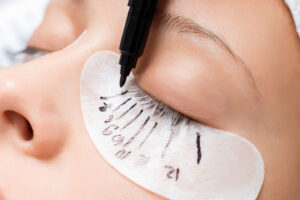
Another common time-waster is making design decisions during the application. Before you begin, establish your lash map, including the lengths and curls you intend to use. Having a clear plan means you are not repeatedly stopping to decide which extension to pick next. A well-prepared lash station also reduces unnecessary reaching and searching for products. Your commonly used lashes, tweezers, adhesive and other tools should be arranged within easy reach.
Good preparation is one of the simplest ways to remove wasted time from a treatment.
3. Improve Your Tweezer Control
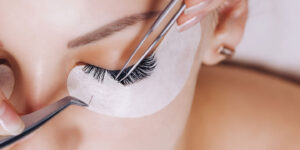
Your tweezers should become an extension of your hand.
If you repeatedly drop extensions, struggle to pick up the correct lash, reposition the extension several times or adjust your grip unnecessarily, these small movements add up throughout a full set.
Work on:
Consistent tweezer grip
Smooth pickup
Controlled isolation
Accurate placement
Minimal unnecessary hand movement
The objective is not to move your hands as quickly as possible. It is to make each movement deliberate and efficient.
4. Stop Repeating the Same Movement
One of the biggest differences between a beginner and an experienced lash artist is the amount of unnecessary movement. A beginner may repeatedly:
Reach for the same tool
Search for a lash length
Adjust the extension
Re-isolate the same lash
Brush repeatedly
Check the same area
Change position unnecessarily
These seconds may seem insignificant, but when repeated hundreds of times during a full set, they can add a substantial amount of time.
Watch your own working process and ask:
“What am I doing repeatedly that I could prepare or organise beforehand?”
This is often where significant improvements in speed can be found.
5. Organise Your Lash Station
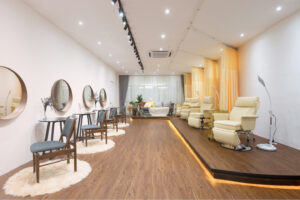
Your lash bed and workstation should support your movement.
Keep your commonly used tools and lash trays positioned where you can reach them easily. Good lighting is also important because you need to see the natural lashes clearly while maintaining precise placement.
Environmental conditions can also affect adhesive performance, so understanding your adhesive's requirements and monitoring the working environment can help maintain a consistent application process.
Your goal is to create a workspace where you don't need to stop constantly to look for something.
6. Don't Over-Brush During the Application
Brushing is important, but excessive brushing during the application can become a time-consuming habit. Some beginners brush the lashes repeatedly because they are uncertain about the direction or design. Instead, have your lash map prepared and check the overall direction at appropriate points during the treatment. Your finishing check should still be thorough. The goal is simply to avoid unnecessary interruptions throughout the application.
7. Learn to Work in a Consistent Pattern
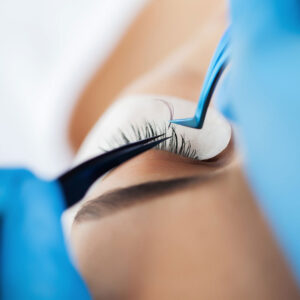
Find a working pattern that allows you to move efficiently around the eye.
Some lash artists work systematically through sections, while others alternate between areas of the eye. What matters most is developing a method that allows you to maintain your placement, direction and design without repeatedly disturbing completed lashes.
Once you find a workflow that works for you, practise it consistently. The more familiar your sequence becomes, the less time you spend thinking about what to do next.
8. Time Yourself — But Don't Obsess Over the Clock
One of the most useful training methods is to record your working time. Instead of simply timing the entire appointment, break it down:
Client preparation
Lash cleansing
Eye pad placement
Mapping
Isolation & Application
Final checking
Finishing
Then identify where most of your time is going. For example, if your total application takes two hours but your isolation is taking significantly longer than the other stages, you now know exactly where to focus your practice.
Don't simply try to finish faster. Try to understand where your time is going.
9. Practise on More Clients

There is no shortcut around hands-on practice.
From our experience training students, many beginners need to work on more than 10 practice clients before their speed and confidence become noticeably more stable.
Your first few models are primarily about learning the technique.
As you continue practising, you begin to develop:
Better hand coordination
Faster isolation
Better lash pickup
More consistent placement
Improved adhesive control
Better understanding of lash direction
Greater confidence in your lash mapping
Eventually, the process becomes much more natural.
Don't Chase Speed Before You Have Quality
This is perhaps the most important point.
If you are still learning how to isolate correctly, attach extensions safely and create a clean design, do not force yourself to become faster simply because you want to finish within an hour. Speed should develop from skill. Not from rushing.
Poor isolation, incorrect attachment and excessive adhesive can affect the quality and comfort of the finished set. Proper isolation and controlled application remain fundamental to professional lash work. Think of your progression like this:
Beginner: Learn the technique correctly
Developing: Improve consistency
Intermediate: Remove unnecessary movements
Experienced: Develop speed and efficiency
Professional: Maintain quality while working efficiently
A Simple Speed Practice Method
If you want to improve your lash application time, try recording your next few practice sessions.
Write down:
Client / Model:
Total application time:
Preparation time:
Left eye:
Right eye:
Biggest delay:
What I can improve next time:
After several sessions, you will start seeing patterns. Perhaps your isolation is slow. Perhaps you spend too long choosing lashes. Perhaps your workstation is poorly organised. Perhaps you repeatedly adjust the same extensions.
Once you identify the problem, you can practise that particular skill instead of simply trying to work faster.
From Two Hours to Professional Speed
Becoming a fast lash artist does not happen overnight.
At Lidylle Studio, we see students progress at different speeds. Some may be able to complete both eyes within two hours during their first hands-on session, while others need considerably more practice.
There is no need to compare yourself with someone who has already completed hundreds of clients.
Your goal should be to become faster than you were before while maintaining the same quality of work. Once you have developed sufficient experience, working within approximately 45 minutes to one hour for an appropriate service can make it easier to structure your appointments efficiently and accommodate more clients during your working day. But remember:
The goal isn't to become the fastest lash artist.
The goal is to become an efficient lash artist who can deliver beautiful, safe and consistent results within a professional timeframe.
That is the difference between simply working quickly and working professionally.
Want to Improve Your Lash Extension Skills?
If you are looking to improve your lash application technique, speed and confidence, our Eyelash Extension Course at Lidylle Studio provides hands-on professional training designed to help students develop practical skills and work more efficiently.
Learn more about our Eyelash Extension Course →

Beyond Beauty: When Inner Wellbeing Meets Outer Beauty
After years of working in the beauty industry and teaching beauty professionals, I began to understand that beauty is never only about what we see on the outside.
Today, women dress up, style their hair, do their makeup, nails and lashes not simply to look beautiful, but also to build an image, express their personality and present themselves with confidence.
And I believe that confidence doesn't come from appearance alone.
When we are rested, emotionally balanced and at peace with ourselves, we think more clearly, make better decisions, perform better in our work and have more confidence in how we present ourselves. That inner state naturally influences the way we look, carry ourselves and connect with others.
This was why I began bringing Sound Bathing into the beauty experience.
After years of teaching, I also started introducing Sound Bathing and Tarot to my students — not simply as healing practices, but as tools for self-discovery and finding their own positioning .
Who are you?
What is your natural energy?
What makes you different?
What kind of beauty truly represents you?
Instead of constantly following trends or copying someone else's style, I wanted my students to understand their own strengths, personality and energy — so they could develop their own direction and have the confidence to create their own version of beauty.
This eventually led me to expand my work into Astrology, Tarot, Sound Healing and Reiki through Lidylle Astrology.
Because I now see beauty as a complete journey:
Inner wellbeing creates clarity.
Clarity creates confidence.
Confidence creates expression.
And expression becomes your outer beauty.
Beauty doesn't have to be superficial, and inner wellbeing doesn't have to replace it.
When the inside and outside are aligned, you simply shine differently.